

Key Takeaways
Start here
The Hiding Phase Is Normal - Here's How Long It Lasts
Next
Litter Box Rules New Owners Routinely Break
Then
What Cats Actually Need to Feel Safe
Also important
Vet Care Basics for Year One
Finally
Setting Realistic Expectations for Your Relationship
The Hiding Phase Is Normal - Here's How Long It Lasts
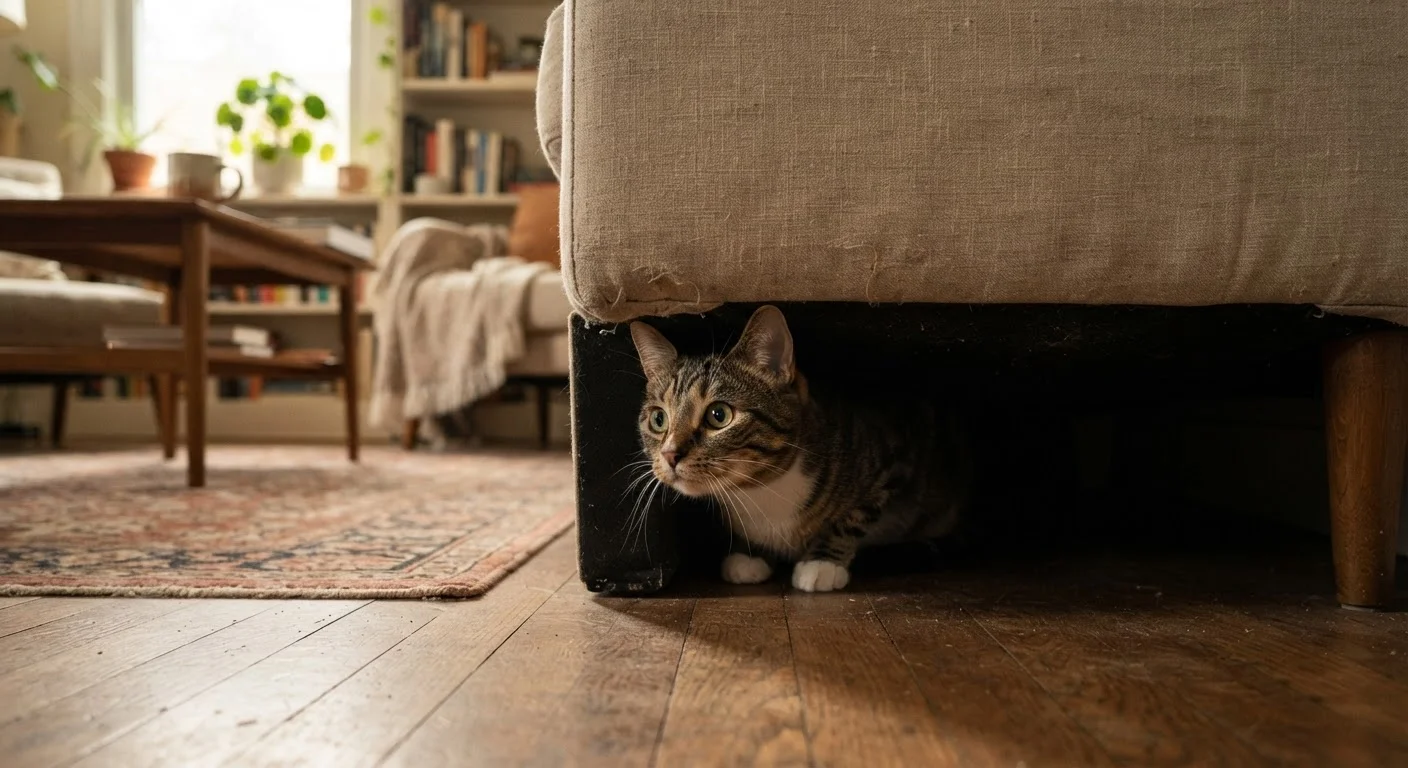
The moment most new cat owners panic is when their cat disappears behind the washing machine and refuses to emerge for 72 hours. This is not a sign that something went wrong. Cats are neophobic - biologically wired to treat unfamiliar environments as potential threats. Hiding is the species-appropriate response to overwhelming sensory input: new smells, sounds, and a complete loss of territorial familiarity.
Most cats decompress within two to fourteen days, though adults from stressful shelter environments may take longer. During this period, place food, water, and a litter box within easy reach of the hiding spot. Sit nearby and read or talk softly - your predictable presence builds familiarity without pressure. Resist the urge to pull the cat out or chase it with affection.
Use a 'base camp' approach on day one
Start your new cat in a single, quiet room - ideally a bedroom or office - with food, water, litter, and a hiding spot. This limits the overwhelming scope of a full house and gives the cat a manageable territory to claim first. Expand access to the rest of the home gradually over one to two weeks as confidence builds.
If your cat hasn't eaten, drunk, or used the litter box in more than 48 hours, contact a veterinarian. Prolonged stress-related anorexia can become a medical issue in cats.
Litter Box Rules New Owners Routinely Break
Litter box problems are among the most common reasons cats are surrendered to shelters - and most of them are preventable. The widely cited guideline is one box per cat, plus one extra. For a single-cat household, that means two boxes. Placement matters as much as quantity: avoid high-traffic areas, loud appliances, and locations where the cat might feel cornered.
Scoop at least once daily. Most cats will begin using alternative spots if the box is even moderately soiled. Avoid strongly scented litters - cats have a far more acute sense of smell than humans and often reject perfumed products. Unscented, clumping clay or natural litters are generally well-tolerated. See our guide to litter box setup mistakes for a detailed breakdown of placement and maintenance errors that lead to behavioral problems.
Neophobia
A fear of unfamiliar things or environments. In cats, this is an instinctive survival response that explains why new cats hide rather than explore.
Passive socialization
A technique where you allow an animal to approach and engage on its own terms rather than initiating contact. Highly effective for building trust with wary cats.
Core vaccines
Vaccines recommended for all cats regardless of lifestyle, because the diseases they prevent are severe or widespread. Examples include the feline distemper combination and rabies vaccines.
Vertical space
Elevated areas - like cat trees or shelves - that give cats a high vantage point. Access to height reduces stress by satisfying a cat's instinct to monitor its surroundings from above.
Territorial scent-marking
A behavior where cats deposit their scent on surfaces through scratching or rubbing to signal ownership and feel more secure in their environment.
What Cats Actually Need to Feel Safe
Cats are not simply small, independent dogs. Their sense of security is spatial and scent-based. Three environmental features make the biggest difference in how quickly a cat settles in:
- Vertical space: Cat trees, shelves, or cleared windowsills give cats an elevated vantage point, which is instinctively calming. A cat that can observe the room from above rarely needs to hide from it.
- Dedicated hiding spots: Covered beds, cardboard boxes, or a closet with the door left ajar serve as retreats. Cats feel safer knowing an exit is available - even when they don't use it.
- Routine: Feeding at consistent times, cleaning the litter box on schedule, and keeping household noise levels predictable dramatically reduces stress-driven behavior.
Scratching surfaces are also non-negotiable - not just for nail maintenance but for scent-marking, which helps cats feel ownership over their space. Without appropriate outlets, furniture becomes the target.
Pheromone diffusers may help
Synthetic feline facial pheromone products, available from most pet supply stores, mimic the calming signals cats naturally deposit when they rub their faces on objects. Some cats respond well to these diffusers during the adjustment period, though individual responses vary. Consult your veterinarian if you're unsure whether this is appropriate for your cat.
Vet Care Basics for Year One
Schedule a wellness exam within the first week, even if your cat came with shelter paperwork. A veterinarian will confirm the spay or neuter status, assess dental health, screen for parasites, and establish a vaccination schedule appropriate for your cat's age and lifestyle. Indoor cats still require core vaccines - feline distemper combination vaccines and, in most states, rabies vaccination are standard.
Flea prevention is often overlooked for indoor-only cats, yet indoor cats are not entirely risk-free. Fleas can enter on clothing or other pets. Ask your vet what preventive regimen makes sense for your household. For a broader picture of what ongoing responsible care looks like beyond year one, see our overview of responsible cat ownership.
Setting Realistic Expectations for Your Relationship
Cats bond - deeply - but on a schedule they set. Forcing lap time or picking up a cat that stiffens in your arms teaches the cat to avoid you, not to tolerate you. The most effective approach is what behaviorists call passive socialization: be present without demanding interaction. Let the cat investigate you, sniff your hand, and initiate contact.
Some cats become openly affectionate within a month. Others remain selectively social for life - and that's within the normal range of feline personality. If you're eventually planning to add another cat, the groundwork you build now with your first cat matters enormously; introducing a second cat works best when your resident cat already feels secure in the home. If you've had dogs before, note that feline communication is quite different - where a wagging tail signals joy in dogs, a lashing tail in cats signals overstimulation. Reading your cat's body language accurately is one of the fastest ways to build trust. Dog ownership has its own adjustment surprises, but cat ownership rewards patience in a distinctly feline way.