
Exotic Small Pets: What Ownership Actually Looks Like for Hedgehogs, Chinchillas, and Ferrets

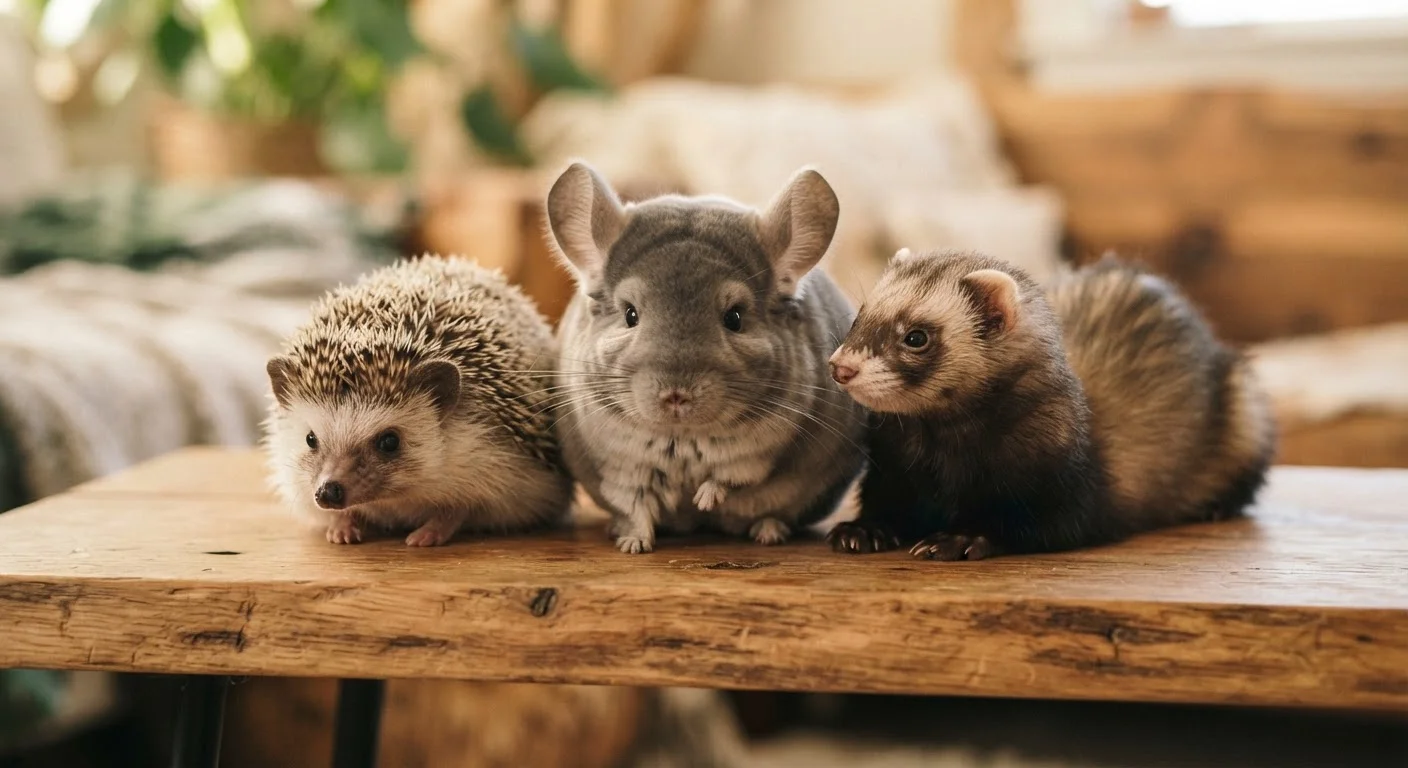
Key Takeaways
Our Verdict
Hedgehogs, chinchillas, and ferrets can all be deeply rewarding companions, but none of them suits a hands-off or low-maintenance lifestyle. Chinchillas demand the most precise environmental control; ferrets need the most daily social engagement; hedgehogs require the most patience during taming. Prospective owners who research thoroughly and prepare accordingly are far more likely to provide - and enjoy - a genuinely good experience.
| Best for | Recommended |
|---|---|
| Owners who prefer quieter, more independent animals with manageable daily interaction | Hedgehog |
| Experienced small-pet owners who can tightly control temperature and humidity at home | Chinchilla |
| Active households that can commit to several hours of supervised free-roam time daily | Ferret |
Why These Three Are Categorized as 'Exotic'
The term exotic pet in a veterinary context generally refers to any species outside the domesticated dog and cat - including hedgehogs, chinchillas, and ferrets. What distinguishes these three from more mainstream small pets like hamsters or guinea pigs is the combination of specialized habitat requirements, dietary specificity, legal variability across states, and a narrower pool of veterinarians trained to treat them.
Before committing to any of these animals, prospective owners should research local ownership laws. Hedgehogs are banned or regulated in several states including California, Hawaii, Georgia, and Pennsylvania. Ferrets are banned in California and Hawaii and restricted in other jurisdictions. Chinchillas are broadly legal but should always be sourced responsibly. Checking with your city or county - not just your state - is essential, as municipal rules can differ.
For a broader look at what small pet ownership involves across species, see our overview of realistic small pet pros and cons.
Hedgehogs: Solitary, Nocturnal, and Often Misread
African pygmy hedgehogs - the species most commonly kept as pets in the US - are nocturnal insectivores with an instinct to self-anoint (rubbing saliva onto their quills) that can alarm new owners. They are not aggressive by nature, but they do require patient, consistent handling before becoming comfortable with humans. Expect several weeks of daily short sessions before a hedgehog relaxes in your hands.
Housing should be a minimum of 2 square feet of floor space, though larger is better. Wire-bottom cages should be avoided as they can injure feet. Temperature must stay between 72°F and 80°F; below 65°F can trigger torpor, a dangerous state mistaken for hibernation in domestic hedgehogs, which can be fatal. A wheel - solid-surface, never wire - is essential for nightly exercise.
Diet consists primarily of a high-protein, low-fat dry cat food or a hedgehog-specific formula, supplemented occasionally with live insects. Obesity is a common health issue in captive hedgehogs. Veterinary care requires an exotic specialist, and annual check-ups are recommended.
Handling Hedgehogs the Right Way
Never pick up a new hedgehog from above - this mimics a predator strike and triggers defensive balling. Instead, scoop from beneath with both hands. Wearing thin gloves during initial sessions can reduce flinching from quill pressure, which in turn helps the animal associate handling with calm rather than startled reactions. Consistency matters more than session length early in the taming process.
Chinchillas: Long-Lived, Temperature-Sensitive, and Dust-Bathing Dependent
Chinchillas are among the longest-lived small pets - commonly 10 to 15 years in captivity - which makes ownership a serious long-term commitment. Their dense fur, which gives them their famously soft coat, also makes them highly susceptible to heat stroke. Room temperatures must stay below 75°F consistently; even brief exposure to higher temperatures can be fatal. Air conditioning in summer is not optional for chinchilla owners in most US climates.
Their digestive systems are delicate. A diet of high-quality grass hay (primarily timothy), a small amount of chinchilla pellets, and minimal treats is the standard approach. High-sugar or high-fat treats - including many items marketed for chinchillas in pet stores - can cause digestive problems or liver disease over time.
Chinchillas require dust baths two to three times per week using volcanic pumice dust, not sand. This maintains their coat and is a behavioral need, not just a grooming preference. Enclosures should be multi-level, well-ventilated, and made of metal rather than plastic, which they will chew through.
| Hedgehog | Chinchilla | Ferret | |
|---|---|---|---|
| Typical lifespan | 4-6 years | 10-15 years | 6-10 years |
| Social needs | Solitary, independent | Can be kept in pairs | Strongly social, pairs recommended |
| Temperature sensitivity | Moderate (72-80°F ideal) | High (below 75°F required) | Low-moderate |
| Diet complexity | Moderate - protein-focused | High - hay-based, no sugar | High - obligate carnivore |
| Daily time commitment | Low-moderate | Moderate | High |
| Legal status variability | Banned in several states | Broadly legal | Banned in CA and HI |
| Exotic vet required | Yes | Yes | Yes |
Ferrets: Highly Social, High-Energy, and Legally Complex
Ferrets are obligate carnivores with a fast metabolism - they eat small meals roughly every three to four hours and need continuous access to high-protein, high-fat food with minimal carbohydrates. Standard grocery-store cat food is generally inadequate; raw meat diets or ferret-specific kibble with meat as the primary ingredient are more appropriate. Ferrets are prone to several serious health conditions including adrenal disease, insulinoma (a pancreatic tumor), and lymphoma, making consistent veterinary care with an exotic specialist essential.
Unlike hedgehogs and chinchillas, ferrets are highly social and do significantly better in pairs or small groups. A lone ferret requires several hours of direct human interaction and supervised free-roam time daily to remain healthy and behaviorally stable. They are also escape artists - any free-roam space must be thoroughly ferret-proofed, including sealing gaps under appliances and securing cabinets.
For those also considering more common alternatives, our comparison of hamster vs. gerbil care differences illustrates how significantly needs can vary even among common small pets.
Ferret-Proofing Is Not Optional
Ferrets can squeeze through gaps as small as an inch and are instinctively drawn to dark, enclosed spaces - including behind refrigerators, inside recliners, and inside washing machines. Before allowing any free-roam time, audit every room at floor level. Recliner chairs are particularly dangerous: ferrets can climb inside the mechanism and be fatally injured when the chair is operated. Many ferret owners keep these animals in free-roam zones rather than whole-home access to manage this risk.
Preparing Your Home and Routine Before Bringing One Home
All three species benefit from preparation that goes beyond buying a cage and food. Identifying an exotic-animal veterinarian in your area before acquisition - not after - is one of the most important steps an owner can take. Emergency situations with these animals require a practitioner who knows the species; a general vet may decline to treat them or lack appropriate medications.
Daily time commitments differ meaningfully. Ferrets need the most active engagement. Chinchillas and hedgehogs are more manageable for households with tighter schedules, though both still require daily feeding, spot-cleaning, and at minimum brief health observation. Use our preparation checklist for bringing a small pet home to confirm your space and supplies are genuinely ready before the animal arrives.
This article provides general educational information about exotic small pet care and is not a substitute for guidance from a qualified exotic animal veterinarian. Always consult a licensed professional for health, dietary, and habitat decisions specific to your animal.