

Key Takeaways
Why Portugal Belongs on Your Travel Radar
Portugal punches well above its size. Packed into a country roughly the size of Indiana, you'll find Atlantic beaches, medieval castles, a UNESCO-recognized wine region, one of Europe's most walkable capital cities, and a southern coast that competes with the Mediterranean on its best days. For American travelers weighing European options, Portugal offers genuine variety without the logistical sprawl of bigger destinations.
The country is also deeply accessible. English is widely spoken in cities and tourist areas, the currency is the euro, and direct flights from several U.S. East Coast hubs land in Lisbon and Porto. That said, accessible doesn't mean predictable - Portugal has its own strong identity, and travelers who arrive expecting a scaled-down Spain or a sun-bleached theme park will be pleasantly disoriented.
90 days
Visa-free stay for U.S. passport holders
Under the Schengen Area agreement, Americans can visit Portugal without a visa for up to 90 days in any 180-day period.
~8 hrs
Average direct flight time from U.S. East Coast
Direct flights from New York and Boston to Lisbon typically run 7-8 hours, making Portugal one of Europe's more reachable destinations from the eastern U.S.
3 hrs
Lisbon to Porto by high-speed train
The Alfa Pendular train service connects Portugal's two major cities in approximately three hours, offering a comfortable alternative to domestic flights.
Key Regions and What Each One Delivers
Portugal's geography is compact but genuinely diverse. Understanding the four main travel regions helps you match your itinerary to what you're actually after.
Lisbon and the Tagus Valley
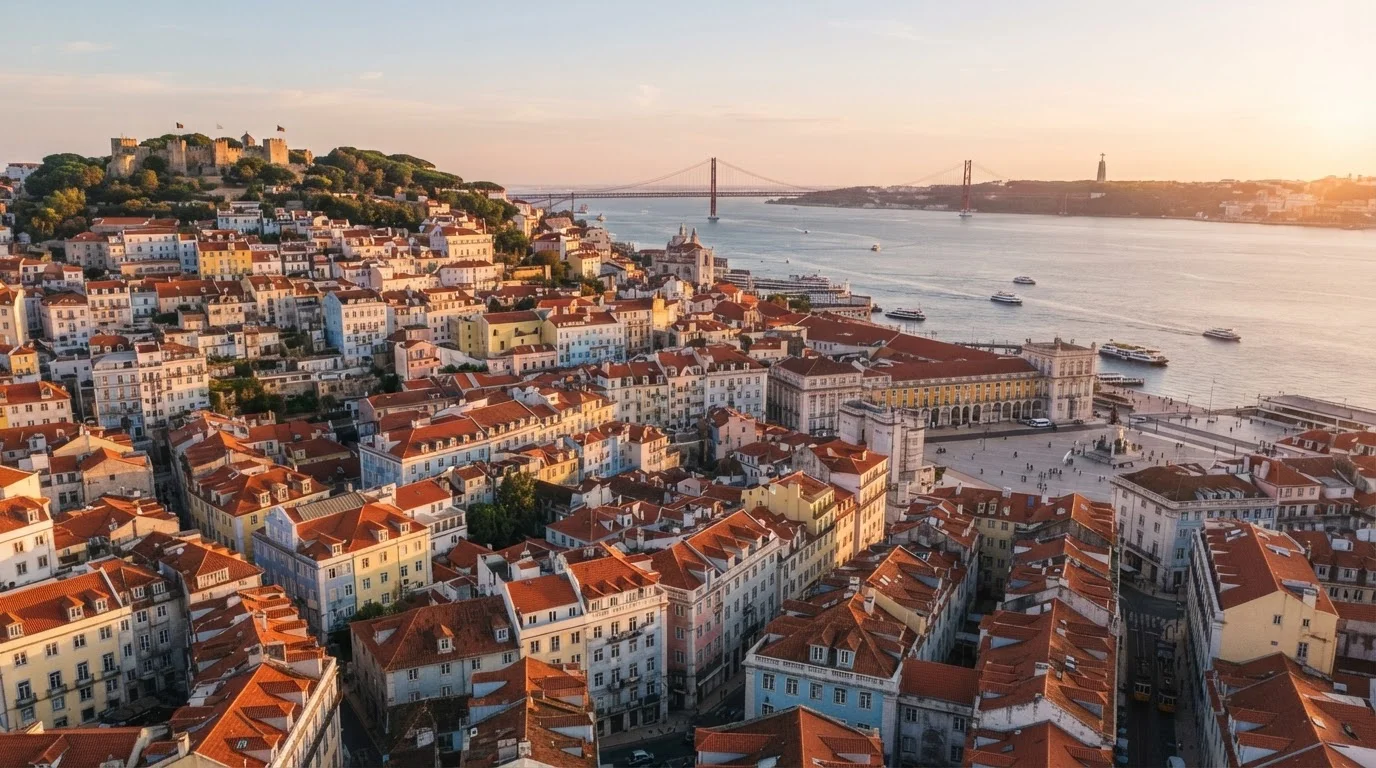
Portugal's capital is hilly, photogenic, and relentlessly interesting. The historic neighborhoods of Alfama, Mouraria, and Belém each carry distinct layers of history. Day trips to Sintra's fairy-tale palaces and the coastal town of Cascais are easy and rewarding. Expect crowds at popular sites, especially May through September.
Porto and the Douro Valley
Porto is the country's second city, smaller and grittier than Lisbon, with a creative energy that rewards wandering. The Douro Valley, stretching east along the river, is one of the world's oldest demarcated wine regions. River cruises and vineyard visits are the signature experiences here.
The Algarve
The south coast is Portugal's most internationally famous stretch - dramatic sea cliffs, sandy coves, and lively resort towns. It's well-developed and crowded in peak summer; shoulder seasons (April-May and September-October) offer the best balance of good weather and manageable visitor numbers.
The Alentejo
The largely undiscovered heartland. Wide plains, cork forests, whitewashed hilltop villages, and an emerging wine scene make the Alentejo the choice for travelers who want to slow down. Infrastructure is thinner here, which is precisely the point for many visitors.
The Alentejo Rewards Slower Travel
If you have at least 10 days in Portugal, carve out two or three nights in the Alentejo. The region's pace and authenticity feel markedly different from the well-trodden tourist circuit. Base yourself in Évora (a UNESCO World Heritage city) and day-trip to surrounding villages and wineries.
Logistics Every American Needs to Sort First
Portugal is part of the Schengen Area, which means U.S. passport holders can enter without a visa for up to 90 days within any 180-day period. Your passport must be valid for at least three months beyond your intended departure date - check this well before you book.
Verify Entry Requirements Before You Book
Schengen rules and specific entry conditions can change. The EU is implementing the ETIAS travel authorization system for non-EU visitors - check the current status through the U.S. Department of State and official EU sources before finalizing any bookings. Do not rely solely on information from third-party travel sites, which may not reflect the latest requirements.
Currency is the euro; U.S. dollars are not accepted. Notify your bank and credit card issuers before departure to avoid fraud holds. Card acceptance is widespread in cities, but rural areas and small markets often prefer cash. See our pre-departure checklist for a full rundown of financial and document prep steps.
If Portugal is one stop on a broader European itinerary, the multi-country trip planning guide covers rail passes, border logistics, and packing strategy for hopping between countries efficiently.
Cultural Etiquette and Honest Expectations
Portuguese culture is warm but not effusive in the way some American travelers expect from Southern Europe. Greetings matter - a simple olá (hello) or obrigado/obrigada (thank you, male/female speaker) goes a long way. Locals appreciate effort even when your pronunciation is imperfect.
Meals run late by American standards. Lunch is typically 1-3 pm; dinner rarely starts before 8 pm, and restaurants may not even open until 7:30 pm. Rushing through a meal or asking for the check the moment you finish eating reads as rude. Take the pace as a feature, not a bug.
Arrive at major Lisbon viewpoints (miradouros) right at opening time or in the late afternoon - midday crowds can make the experience genuinely unpleasant in peak season.
Popular miradouros like São Pedro de Alcântara and Portas do Sol attract heavy tourist foot traffic from mid-morning; early and late visits give you the same panoramic views with a fraction of the congestion.
When dining, ask for the prato do dia (dish of the day) at lunchtime - it's almost always a generous, freshly made meal at a significantly lower price than à la carte options.
The daily special is how Portuguese workers eat lunch; it's a reliable indicator of what the kitchen does well and typically includes a drink and dessert in the price.
Tipping is genuinely optional and culturally different from the U.S. standard. Rounding up the bill or leaving a small amount (5-10%) at a sit-down restaurant is appreciated; tipping at cafes or pastelarias (pastry shops) is uncommon. Do not feel obligated to match American tipping norms.
Noise levels in residential neighborhoods are taken seriously, particularly at night. The Portuguese concept of sossego - quiet, peace - is real and respected socially.
Getting Around Portugal
Train travel between Lisbon, Porto, and major Algarve towns is comfortable and reasonably priced. The Alfa Pendular service connecting Lisbon and Porto takes around three hours and is a genuinely pleasant ride. Book tickets through the national rail operator (CP) in advance for popular routes, especially in summer.
Driving is the practical choice for the Alentejo, the Douro Valley vineyards, and coastal areas outside the main resort zones. Roads are generally well-maintained; an international driving permit isn't required for U.S. drivers, but carry your U.S. license and confirm your car rental's coverage terms before you leave. Parking in Lisbon and Porto city centers is genuinely difficult - leave the car and use transit once you're in the city.
Lisbon's metro, tram, and bus network covers the city well. The iconic Tram 28 is scenic but extremely crowded with tourists; for practical transport within Alfama, the metro or a rideshare app is often faster. Porto's metro is similarly useful for reaching the airport and major neighborhoods.
Food, Drink, and What to Actually Order
Portuguese cuisine is built around good ingredients treated simply: fresh Atlantic seafood, slow-braised meats, olive oil, garlic, and bread that arrives at the table before you order (note: you'll be charged for anything you eat from the bread basket - this is standard practice called couvert, not a gift).
Don't leave without trying bacalhau (salt cod, reportedly available in over 300 preparations), pastéis de nata (custard tarts, best warm from the oven), caldo verde (a hearty kale soup), and grilled sardines in the summer months. Porto's signature dish, francesinha, is a layered meat sandwich drowning in a spiced tomato-beer sauce - it's a lot, in the best possible way.
Portuguese wine is excellent and underpriced by international standards. Wines from the Douro, Alentejo, and the Vinho Verde region (green wine - young, slightly sparkling whites) all deserve attention. Ginjinha, a sour cherry liqueur, is the traditional Lisbon street drink.
“Portuguese cuisine is an Atlantic cuisine - it tastes of wind and salt and centuries of sea travel. The simplicity is the technique.”
— José Avillez, Portuguese chef and culinary author
Planning Your Trip: Practical Final Steps
Portugal rewards travelers who do a little homework before arrival. Check current entry requirements and any travel advisories through the U.S. Department of State's official travel portal before booking - conditions can change. Travel health insurance is strongly recommended; the European Health Insurance Card (EHIC) applies to EU citizens, not Americans, so standard U.S. health coverage abroad is typically limited.
For solo travelers, Portugal is consistently regarded as one of Europe's safer destinations, though standard urban precautions - watch your belongings on public transit, be alert in very crowded tourist areas - always apply. Our solo travel preparation guide covers the realistic tradeoffs in more depth.
For a structured pre-departure checklist covering documents, health prep, and contingency planning, see Before You Book. And if you're building a broader trip planning framework, that hub has practical resources for every stage from research to return.
This article provides general travel information for educational purposes. Entry requirements, visa rules, health and safety conditions, and local regulations can change; always verify current details with official government and provider sources before traveling.
U.S. Department of State - Portugal Travel Advisory
The official U.S. government source for current travel advisories, entry requirements, and safety information for Portugal. Verify here before booking.
Comboios de Portugal (CP) Rail Booking
Portugal's national rail network portal for checking schedules and booking tickets on intercity and Alfa Pendular routes between Lisbon, Porto, and the Algarve.
Pre-Trip Planning Checklist for American Travelers
A structured checklist covering documents, health prep, financial logistics, and contingency planning - useful companion reading before finalizing any Portugal itinerary.