

Key Takeaways
Our Verdict
Caulk, weatherstripping, and sealants are not interchangeable - each is engineered for a specific type of gap, movement level, and exposure condition. Matching the right product to the right location is the single most important factor in getting a long-lasting seal that actually reduces drafts and moisture intrusion.
| Best for | Recommended |
|---|---|
| Sealing fixed cracks around trim, siding, and non-moving window frames | Caulk |
| Stopping drafts around doors and operable windows that open and close daily | Weatherstripping |
| High-temperature areas like furnace flues, fireplaces, or around exhaust pipes | Specialty Sealants |
| Wet, high-movement joints in bathrooms and kitchens | 100% Silicone Sealant |
Why the Distinction Matters
Walk down the caulk aisle at any hardware store and you'll find dozens of tubes with overlapping claims. Pick the wrong one - or use caulk where weatherstripping belongs - and you'll be redoing the job within a season. More importantly, air leaks and moisture intrusion cause real structural damage over time, making material selection a money-saving decision, not just a cosmetic one.
Before spending an afternoon sealing your home, it helps to understand the simple rule behind all three categories: is the gap stationary or does it move? That one question guides most decisions.
For a broader seasonal approach to protecting your home, see our weatherproofing checklist which covers sealing alongside pipe protection and heating prep.
| Caulk | Weatherstripping | Specialty Sealant | |
|---|---|---|---|
| Gap type | Static, non-moving joints | Moving gaps (doors, operable windows) | High-stress or hazardous locations |
| Typical locations | Trim, siding joints, plumbing penetrations | Door frames, window channels, thresholds | Flues, foundations, fire-rated walls, roofing |
| Movement tolerance | Low - cracks if flexed repeatedly | High - designed for daily compression | Varies by product; generally high |
| DIY difficulty | Easy | Easy to moderate | Moderate; some require professional install |
| Paintable | Latex yes; silicone no | Depends on material type | Usually no |
| Typical lifespan | 5-10 years if applied correctly | 3-7 years depending on traffic | Varies widely by product |
Caulk: The Go-To for Static Gaps
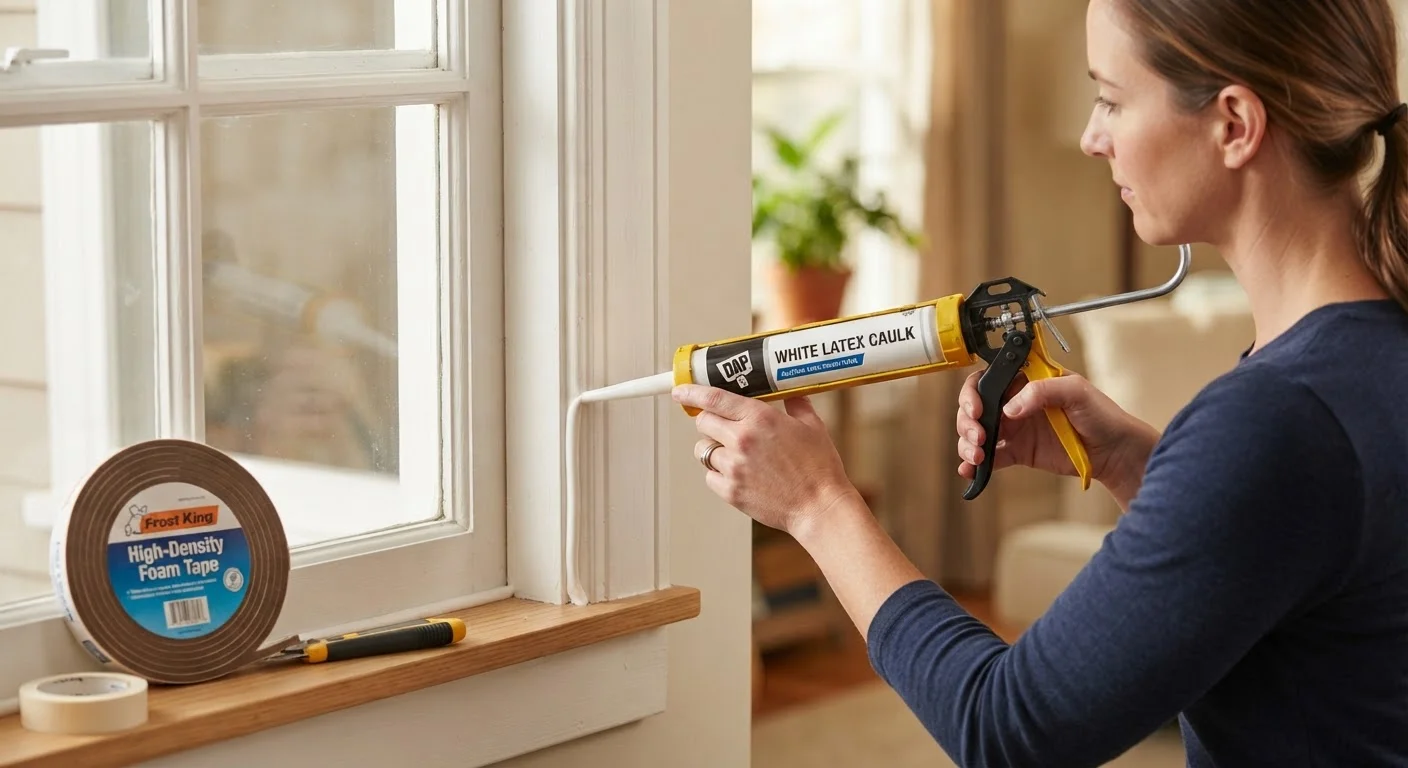
Caulk is a flexible compound applied to stationary gaps - joints that don't move once the house settles. Common caulk locations include:
- Where window and door trim meets exterior siding
- Along baseboards and crown molding
- Around plumbing penetrations through walls
- Gaps in exterior siding joints or between masonry and wood
Latex (acrylic) caulk is paintable and easy to clean up with water, making it the standard choice for interior trim and most exterior joints not exposed to standing water. Silicone caulk resists moisture and temperature extremes better, making it appropriate around sinks and tubs - though it cannot be painted. For wet interior areas specifically, see our guide on keeping wet areas watertight.
Match Caulk Type to Surface and Exposure
For most painted interior trim, an acrylic latex caulk is the practical choice - it's easy to smooth, cleans up with water, and takes paint well. Switch to a siliconized or 100% silicone product anywhere moisture is a regular factor, such as around tubs, sinks, and exterior window sills. Always read the label for minimum application temperature, since caulk applied in cold conditions often fails to cure properly.
Caulk fails when applied over dirty, wet, or unpainted surfaces. Always clean and dry the joint first, and check that the gap is no wider than about half an inch - larger gaps need a backer rod first. For a deeper look at what causes caulk to peel early, see why caulk fails early.
Weatherstripping: Built for Movement
Every time you open and close a door or operable window, the gap it creates flexes. Caulk cracks under that repeated compression and release - weatherstripping is designed specifically for this dynamic environment.
Common weatherstripping types include:
- Foam tape: Self-adhesive and inexpensive; suitable for low-traffic windows and rarely used doors. Compresses easily but wears out faster under heavy use.
- V-strip (tension seal): A folded plastic or metal strip installed along the sides of door and window channels; durable and nearly invisible once in place.
- Door sweeps: Mounted to the bottom edge of a door to seal the gap between door and threshold; critical for blocking both drafts and insects.
- Rubber or silicone bulb gaskets: Often found on exterior door frames; compress to form a tight seal without cracking over years of use.
Weatherstripping is one of the highest-return maintenance tasks in a home - a worn door sweep or compressed foam seal can add meaningfully to heating and cooling costs over a winter or summer. The exterior maintenance tasks guide covers this alongside other envelope-protection steps.
Specialty Sealants: When Standard Caulk Isn't Enough
Some locations push beyond what standard caulk or weatherstripping can handle. Specialty sealants fill those gaps:
- High-temperature silicone sealant: Rated for extreme heat around furnace flue pipes, wood stove collars, and fireplace surrounds. Standard caulk will char and fail here.
- Hydraulic or polyurethane sealant: Used for cracks in concrete foundations, driveways, and masonry where water pressure or significant movement is a factor.
- Intumescent sealant: A fire-blocking product that expands when exposed to heat, used to seal penetrations through fire-rated walls and floors - required by most building codes in those locations.
- Butyl rubber sealant: Commonly used on roofing flashing, gutters, and skylights where long-term UV and water exposure demand a highly durable bond.
Don't Use Standard Caulk Near Heat Sources
Applying ordinary latex or silicone caulk around furnace flues, chimney penetrations, or wood stove surrounds is a fire hazard. These areas require products rated for high-temperature exposure - typically labeled as 'high-heat' or 'furnace cement.' When in doubt about any penetration near combustion equipment, have a licensed professional assess and seal it.
If you're uncertain about what's needed around a furnace flue, chimney penetration, or any location adjacent to gas lines, consult a licensed HVAC technician or contractor. The energy efficiency gains from proper sealing are real - but the wrong material in a high-heat zone poses a safety risk.
Homeowners thinking about whole-house performance upgrades may also find it useful to compare insulation types, since sealing and insulation work together to reduce energy loss.