

Key Takeaways
Roof Leak Escalation
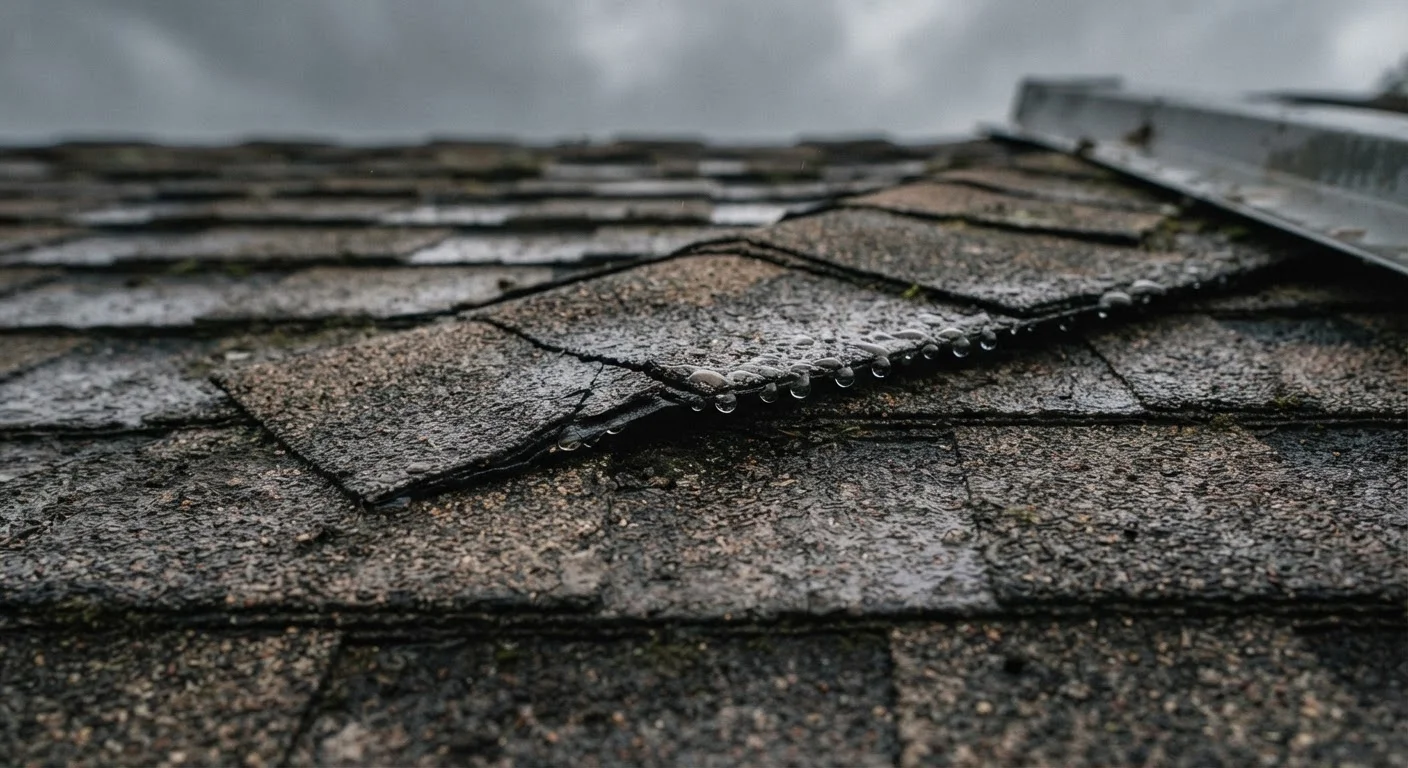
Roof leak escalation is the process by which a small, seemingly minor opening in a roof - a cracked shingle, failed flashing, or deteriorated sealant - allows water to penetrate and progressively damage the layers beneath it. Over time, what starts as a pinhole-sized breach can saturate insulation, rot structural wood, and foster mold growth throughout a home's interior systems. The damage is rarely visible until it has already advanced significantly.
Water follows the path of least resistance through roofing assemblies, meaning the point where moisture appears on a ceiling is often several feet away from the actual breach in the roof membrane.
How Water Moves Through a Compromised Roof
When a roof develops even a minor breach - a missing shingle, cracked flashing around a chimney, or a dried-out sealant joint - water doesn't simply drip straight down. It follows gravity along rafters, sheathing, and insulation, often traveling several feet horizontally before it appears anywhere visible. This is why a ceiling stain in the middle of a room may point to a leak origin near the ridge or at a valley seam far from where the moisture finally shows up.
The journey water takes through roofing layers compounds the damage. It first saturates the felt underlayment or synthetic membrane beneath the shingles. Once that protective layer is overwhelmed, moisture reaches the roof deck - typically oriented strand board (OSB) or plywood sheathing. These engineered wood products absorb water readily, swell, delaminate, and eventually rot. By the time a homeowner notices anything, the sheathing may already be structurally compromised across a larger area than the original breach.
The Leak Origin Rarely Matches the Stain
Water entering through a breach in the roofing system rarely travels straight down. It follows rafters, sheathing seams, and insulation until gravity forces it to a low point - which may be several feet away from the actual entry point. When investigating a ceiling stain, always trace upward and outward during an attic inspection rather than assuming the source is directly above the visible damage.
Understanding this progression is one reason the cost of deferred maintenance grows so quickly - each stage of water infiltration enables the next, more expensive one.
The Hidden Cascade: Insulation, Mold, and Structural Rot
Below the roof deck, attic insulation is the next victim. Fiberglass batts and blown cellulose both lose most of their thermal resistance when wet, meaning a leaking roof quietly drives up heating and cooling costs long before any visible damage appears. Wet insulation also stays wet - it doesn't dry quickly in a closed attic space - which creates the persistent moisture environment that mold and rot require.
40%
Of building-related problems linked to water intrusion
Industry estimates from roofing and building science professionals consistently attribute roughly 40% of all building failures to water-related damage, underscoring how central moisture control is to structural integrity.
24-48 hrs
Time for mold to begin growing on wet building materials
According to the U.S. Environmental Protection Agency, mold can begin to grow on wet surfaces within 24 to 48 hours under typical indoor temperature conditions.
10-20×
Cost multiplier when repairs are delayed
Roofing industry guidance broadly holds that water damage left unaddressed can multiply repair costs by an order of magnitude as secondary damage to insulation, sheathing, and framing accumulates.
Structural wood - rafters, ridge boards, ceiling joists - is the most serious casualty of prolonged moisture exposure. Wood rot is caused by fungi that break down cellulose and lignin; once established, it spreads to adjacent framing even if the original water source is eliminated. Replacing rotted rafters or ridge structure is among the most expensive repairs a homeowner can face, often requiring a contractor to partially open the roof to access compromised framing from above.
Mold carries its own concerns. It can spread rapidly through an attic and, in poorly sealed homes, into living spaces through gaps around light fixtures, duct penetrations, and attic hatches. Professional mold remediation adds significant cost on top of structural repairs. For a closer look at how attic conditions interact with these risks, see our guide on inspecting and maintaining attic and crawl spaces.
Early Warning Signs Worth Acting On
The challenge with roof leaks is that homeowners rarely see them until they have already progressed. Knowing the subtler early signals helps catch problems before they escalate:
- Ceiling discoloration: Yellow-brown rings or spreading stains are often the first interior sign. Don't assume a stain that has "dried out" means the problem resolved itself.
- Granules in gutters: Asphalt shingles shed protective granules as they age or sustain impact damage. Heavy accumulation in gutters suggests the shingle surface is deteriorating.
- Daylight in the attic: During a daytime attic inspection with lights off, any visible daylight penetrating the roof deck is a direct indicator of a breach.
- Musty odors upstairs: A persistent musty smell in upper rooms or the attic is a common indicator of trapped moisture or early mold growth.
- Soft spots or sagging: Any visible sagging in the roofline or spongy feeling when walking near the roofline suggests the sheathing beneath has already been compromised.
Inspect Twice a Year - At Minimum
Schedule a brief attic walkthrough each fall and spring. Look for daylight, staining on the underside of the roof deck, or any soft or discolored wood around rafters and the ridge board. Catching moisture intrusion before it saturates insulation or reaches framing is the single most cost-effective roof maintenance habit a homeowner can develop.
Seasonal inspection - particularly in fall before winter precipitation and in spring after freeze-thaw cycles - is the most reliable way to catch emerging problems early. Our seasonal weatherproofing checklist includes roof and flashing checks as part of a broader pre-winter review. Also consider pairing a roof check with gutter inspection and cleaning, since clogged gutters contribute to water backing up under roofing materials.
When to Call a Professional
Homeowners comfortable with ladder safety and surface-level observation can perform visual attic inspections and look for missing or damaged shingles from the ground with binoculars. However, walking on a roof without proper equipment and footwear carries real fall risk, and improper amateur repairs - such as applying caulk over a flashing joint without addressing the underlying separation - can trap moisture and accelerate damage rather than stop it.
A licensed roofing contractor should be consulted whenever you identify active water entry, visible sheathing damage, suspected mold, or structural softness. Many contractors offer inspection services separately from repair work. Getting an assessment early, before a small problem becomes a system-wide failure, is nearly always the more cost-effective path. As a general principle, the connection between small neglected problems and large repair bills is well-documented - common maintenance myths often lead homeowners to underestimate how quickly minor issues compound.
This article is for general informational purposes only. Roofing work carries significant safety risks; always consult a licensed roofing professional before undertaking repairs or assessments beyond basic visual inspection.