

| Recommended organic mulch depth | 2-4 inches (University cooperative extension guidelines) |
| Keep mulch away from stems/trunks | At least 2-3 inches of clearance (Arborist and extension best practices) |
| Organic mulch refresh frequency | Once or twice per year |
| Inorganic mulch lifespan | 5-10+ years depending on material |
| Rubber mulch - vegetable gardens | Not recommended (General horticultural guidance) |
| Straw vs. hay | Use straw - hay contains weed seeds |
What Mulch Actually Does
Mulch is any material laid over the soil surface to regulate temperature, retain moisture, suppress weeds, and in some cases enrich the soil as it breaks down. It isn't one-size-fits-all - the right mulch depends on what you're growing, your climate, and the look you want. Understanding the basics helps you spend your time and budget where they'll have the most impact.
| Recommended organic mulch depth | 2-4 inches (University cooperative extension guidelines) |
| Keep mulch away from stems/trunks | At least 2-3 inches of clearance (Arborist and extension best practices) |
| Organic mulch refresh frequency | Once or twice per year |
| Inorganic mulch lifespan | 5-10+ years depending on material |
| Rubber mulch - vegetable gardens | Not recommended (General horticultural guidance) |
| Straw vs. hay | Use straw - hay contains weed seeds |
Mulch falls into two broad categories: organic (materials that decompose and feed the soil) and inorganic (materials that don't break down and focus on weed suppression and aesthetics). Each has a place in a well-managed yard. If you're also working on long-term lawn health, pairing the right mulch with solid turf practices makes a measurable difference.
Organic Mulch Types at a Glance
Organic mulches decompose over time, feeding beneficial soil organisms and improving soil structure. They typically need refreshing once or twice per year.
Organic mulch
Any mulch material derived from plant or animal sources that decomposes over time, enriching soil with nutrients and organic matter. Examples include wood chips, straw, and compost.
Inorganic mulch
Mulch made from non-decomposing materials such as gravel, rubber, or landscape fabric. It does not improve soil fertility but provides long-lasting weed suppression and ground coverage.
Nitrogen tie-up
A temporary condition in which soil microbes decomposing high-carbon materials like fresh wood chips consume available nitrogen, potentially reducing what's accessible to nearby plants. The effect is usually short-lived and most pronounced in the immediate soil surface.
Xeriscaping
A landscaping approach that minimizes water use by selecting drought-tolerant plants and materials. Gravel mulch is often used in xeriscaped yards to reduce irrigation needs.
Crown rot
A fungal condition caused by excess moisture around the base of a plant stem or crown. Piling mulch too deep or too close to plant stems creates conditions that promote crown rot.
Wood Chips
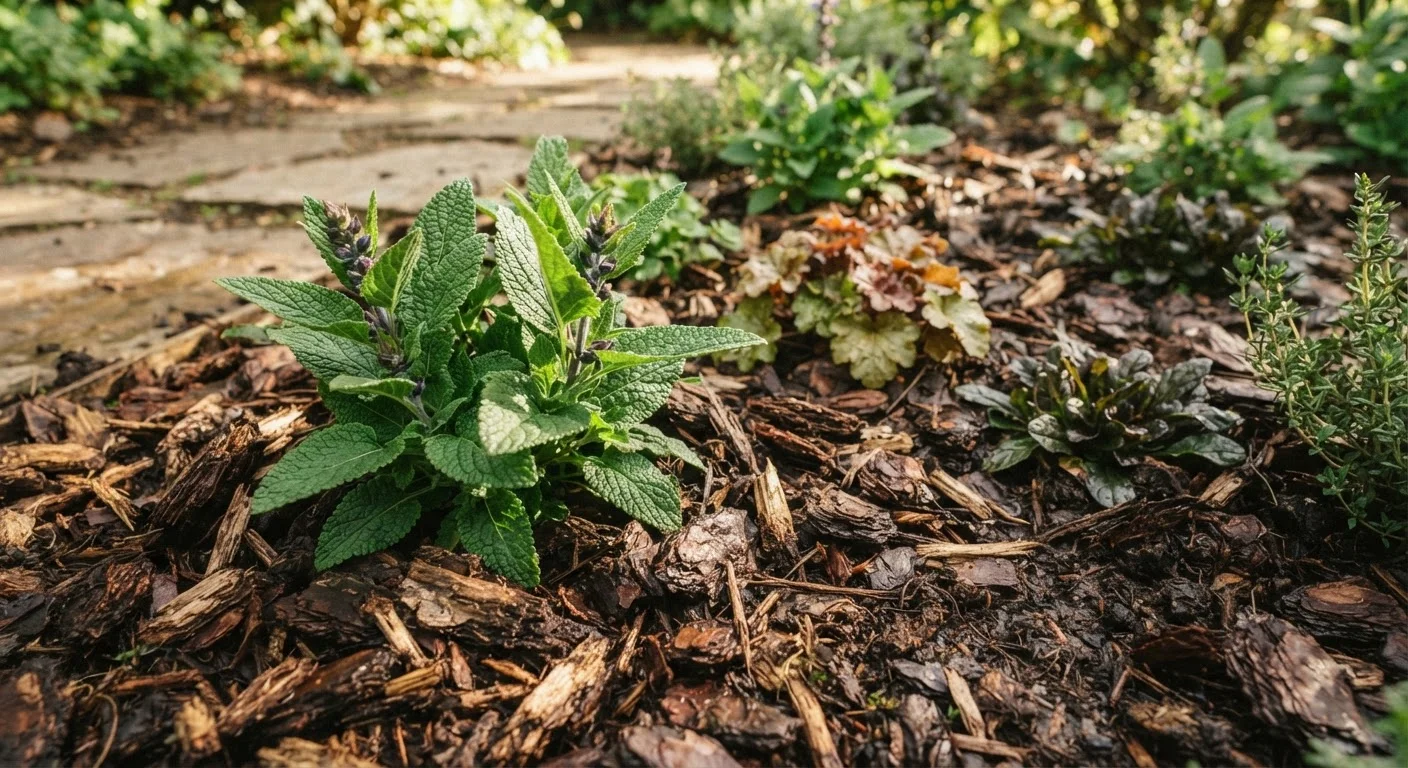
Best for: Perennial beds, trees, shrubs, pathways. Wood chips break down slowly, hold moisture well, and moderate soil temperature. Apply in a layer 2-4 inches deep. Avoid piling chips directly against plant stems or tree trunks, as trapped moisture can cause rot. Fresh wood chips from a chipper may temporarily tie up nitrogen as they decompose, so they work better around established woody plants than tender annuals.
Shredded Bark
Best for: Ornamental beds, slopes. Shredded bark knits together and resists washing away on inclines better than loose chips. It breaks down more slowly than straw but faster than wood chips, offering a balance of longevity and soil benefit. It's commonly used around shrubs and foundation plantings for a tidy appearance.
Straw
Best for: Vegetable gardens, newly seeded lawns. Straw is lightweight, inexpensive, and decomposes quickly to add organic matter. It's ideal for vegetable beds because it keeps soil-borne disease from splashing onto leaves and regulates soil warmth. Use straw, not hay - hay contains seeds that become weeds. This pairs well with the methods outlined in our raised bed gardening guide.
Compost
Best for: Annual beds, vegetable gardens. A 1-2 inch layer of finished compost acts as both mulch and soil amendment. It releases nutrients steadily and improves drainage and aeration. Learn how to produce your own with our home composting guide.
Pine Needles (Pine Straw)
Best for: Acid-loving plants (blueberries, azaleas, rhododendrons). Pine needles are slow to decompose, allow good water penetration, and are a low-cost option in pine-abundant regions. Despite common belief, a thin layer of pine needles doesn't dramatically acidify soil - but it's still the preferred choice for plants that thrive in lower pH environments.
Inorganic Mulch Types at a Glance
Inorganic mulches don't improve soil health, but they last much longer and suit specific situations where longevity and low maintenance matter most.
Gravel and River Rock
Best for: Desert landscapes, drainage areas, xeriscaping. Gravel doesn't retain moisture the way organic mulches do - which is an advantage in arid climates or around cacti and succulents prone to crown rot. It's heavy, so it stays put in wind, and it won't attract pests. However, it absorbs heat in summer, which can stress roots in hot regions.
Rubber Mulch
Best for: Playgrounds, pathways, high-traffic areas. Made from recycled tires, rubber mulch lasts for many years and provides cushioning. It doesn't improve soil and is not recommended for vegetable gardens or edible plant areas. For decorative or recreational ground cover where longevity is the priority, it's a practical option.
Landscape Fabric
Best for: Under gravel or stone, pathways. Landscape fabric suppresses weeds under hardscape materials and is most effective in low-maintenance zones. Over time, soil and organic debris accumulate on top, allowing weeds to take root anyway. It's least useful in planted beds where you'll be adding new plants regularly.
Rubber Mulch and Edible Gardens
Rubber mulch made from recycled tires is a practical choice for playgrounds and decorative pathways, but it is not appropriate for vegetable gardens or any areas where edible plants grow. Concerns about potential leaching of compounds from recycled rubber mean most horticultural experts recommend keeping it away from food-producing areas. Stick to organic options - straw, compost, or wood chips - wherever you grow food.
Choosing the right ground cover is just one piece of a well-functioning yard. For grass-specific decisions, our guide on cool- vs. warm-season grasses helps you align your lawn variety with your region before you think about mulching around it.