

Key Takeaways
Rabbit Enclosure
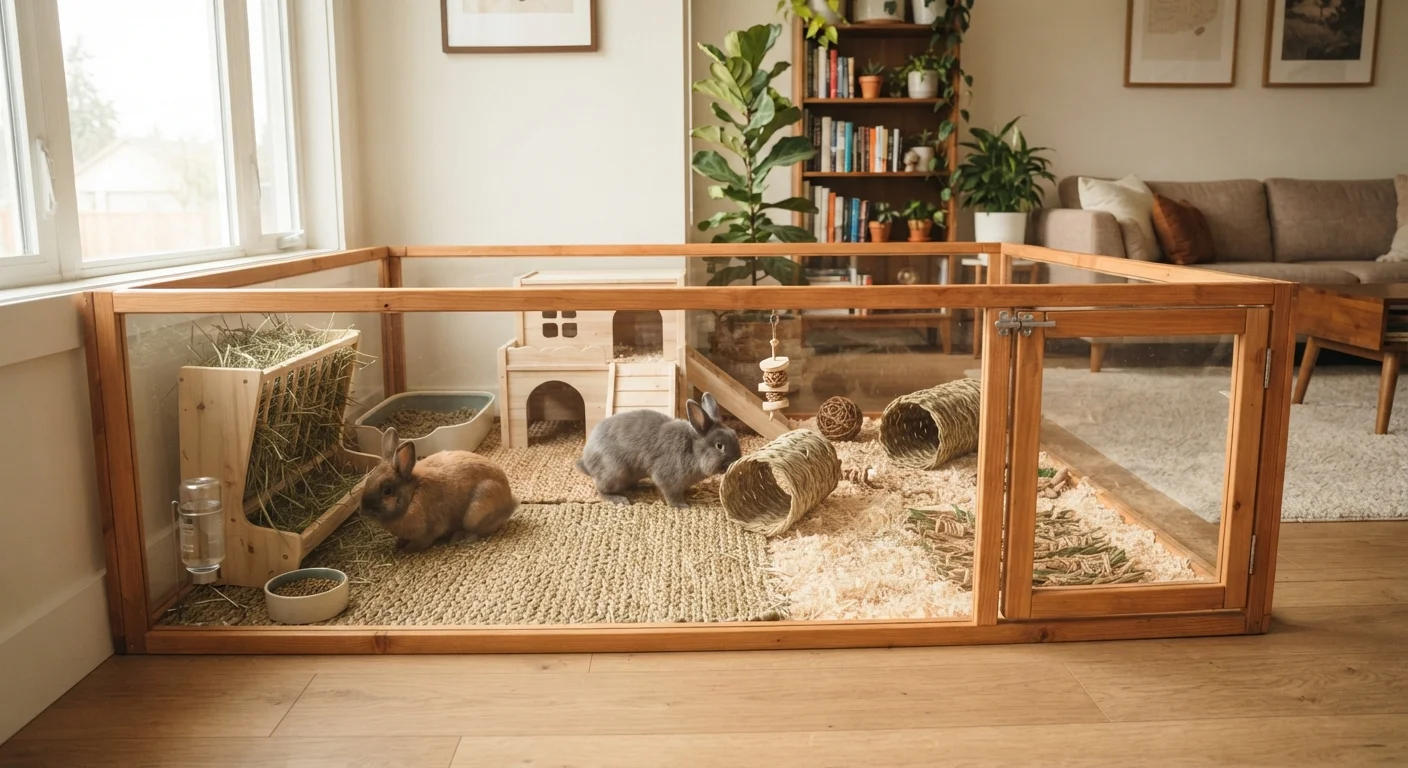
A rabbit enclosure is the dedicated living space where a pet rabbit sleeps, eats, and shelters when not free-roaming. Unlike a cage for smaller rodents, a proper rabbit enclosure must be large enough to allow the rabbit to stand fully upright, stretch out completely, and take several consecutive hops. It typically includes flooring, a litter area, a food station, and hiding spots.
Rabbit welfare organizations generally recommend a minimum usable floor space of 12 square feet for the enclosure itself, with additional supervised exercise space; exact guidelines vary by the rabbit's size and breed.
Why Enclosure Size Is Non-Negotiable
One of the most common mistakes new rabbit owners make is purchasing an enclosure that's too small. Rabbits are not passive, sedentary animals - they are prey species that have evolved to move constantly and cover significant ground. An enclosure that prevents natural movement contributes directly to physical health problems, including skeletal issues, obesity, and gastrointestinal slowdown (a serious and potentially life-threatening condition in rabbits).
A proper enclosure should allow your rabbit to:
- Stand fully upright on hind legs without the head touching the top
- Stretch out completely in any direction when lying down
- Take at least three to four consecutive hops in a straight line
For most domestic rabbit breeds, this means a minimum of 12 square feet of floor space - and that figure is a floor, not a target. Giant breeds such as Flemish Giants need considerably more. For the full picture on what rabbit ownership involves day to day, see our comprehensive rabbit care guide.
Measure Before You Buy Any Enclosure
Don't rely on product descriptions or 'suitable for rabbits' labeling when choosing an enclosure. Measure the actual usable floor area - length multiplied by width - and compare it against the minimum 12-square-foot guideline. Tall enclosures with narrow bases often look spacious but provide far less floor space than a rabbit actually needs.
Flooring, Ventilation, and Placement
Flooring material is one of the highest-impact decisions in rabbit housing. Wire-bottomed enclosures - still widely sold - place continuous pressure on a rabbit's unpadded feet and frequently cause sore hocks, an ulcerative condition that ranges from uncomfortable to severely debilitating. Solid flooring made from wood, plastic, or tile is far preferable. If you're working with a wire-floor enclosure, cover it fully with a solid mat, fleece liner, or interlocking foam tiles - ensuring they can't be chewed through and ingested.
Rabbits are highly sensitive to air quality. Their respiratory systems react poorly to ammonia buildup from urine, dusty bedding, and stagnant air. The enclosure should be placed in a well-ventilated room, but not in the path of drafts or air conditioning vents. Direct sunlight is equally dangerous - rabbits are prone to heatstroke at temperatures above roughly 80°F, and even a few hours of direct afternoon sun can make an enclosed space dangerously warm.
Litter Training Works With Natural Behavior
Rabbits naturally select a specific corner of their space as a latrine area. Placing a litter box in whichever corner your rabbit already uses - rather than choosing a location that's convenient for you - dramatically increases litter training success. Spayed and neutered rabbits tend to be more consistent litter users than intact animals.
Bedding material also matters. Avoid cedar and pine shavings, which contain aromatic oils that can irritate a rabbit's respiratory system. Paper-based bedding, hay, or fleece liners are widely recommended alternatives.
Enrichment: What It Looks Like Inside a Rabbit's Space
Enrichment is frequently treated as an optional upgrade, but for rabbits it's a welfare basic. Rabbits that lack mental stimulation develop stress behaviors - excessive chewing, repetitive movements, lethargy, or aggression - that indicate genuine psychological distress.
Inside the enclosure, enrichment should cover several categories:
- Foraging: Hay should make up the majority of a rabbit's diet and should be available in loose, generous quantities that encourage rooting and searching - not just a compressed block in a feeder. See what to feed a pet rabbit at every life stage for dietary guidance.
- Hiding and resting: Prey animals need covered spaces where they can retreat and feel secure. A cardboard box with an entry hole is effective and cheap.
- Chewing: Rabbits' teeth grow continuously and require regular wear. Safe chew items - untreated wood sticks, willow rings, cardboard - help prevent dental problems.
- Tunnels and platforms: Low platforms and tunnels allow rabbits to express natural exploration and surveillance behaviors.
Outside the enclosure, supervised free-roaming time in a bunny-proofed room or secure exercise pen should be provided daily. This is not a substitute for proper enclosure sizing - it's an additional requirement.
Setting Up Before Your Rabbit Arrives
Getting the enclosure right before a rabbit comes home prevents a stressful scramble to reconfigure an inadequate setup. Confirm that you have solid flooring, appropriate bedding, a litter box in a corner (rabbits tend to choose a latrine spot naturally), a hay rack or generous loose hay supply, a water source, and at least one hiding structure before the animal arrives.
If you're still in the planning stage, our small pet preparation checklist walks through what should be in place before a rabbit, guinea pig, or other small animal comes home. Taking time to assess your space for temperature stability, traffic noise, and proximity to other pets will save your rabbit from unnecessary stress during the critical settling-in period.
This article provides general educational information about rabbit housing. It is not a substitute for guidance from a veterinarian experienced with small animals or exotic pets. Always consult a qualified professional for advice specific to your rabbit's health or behavioral needs.