

| Primary diet component (all ages) | Grass hay (timothy, orchard, or meadow) |
| Hay proportion of adult diet | 75-80% or more |
| Age to transition from alfalfa to grass hay | Around 6 months |
| Daily leafy greens (adult) | ~1 packed cup per 2 lbs body weight |
| Average rabbit lifespan (domestic) | 8-12 years |
| Senior threshold | 5+ years |
Why Life Stage Matters for Rabbit Nutrition
Rabbits are not simply small dogs or cats - they are herbivores with a highly specialized digestive system that depends on the right balance of fiber, protein, and moisture at every age. Feeding the wrong ratio of foods during a critical growth window or senior phase can lead to gastrointestinal problems, obesity, or dental disease.
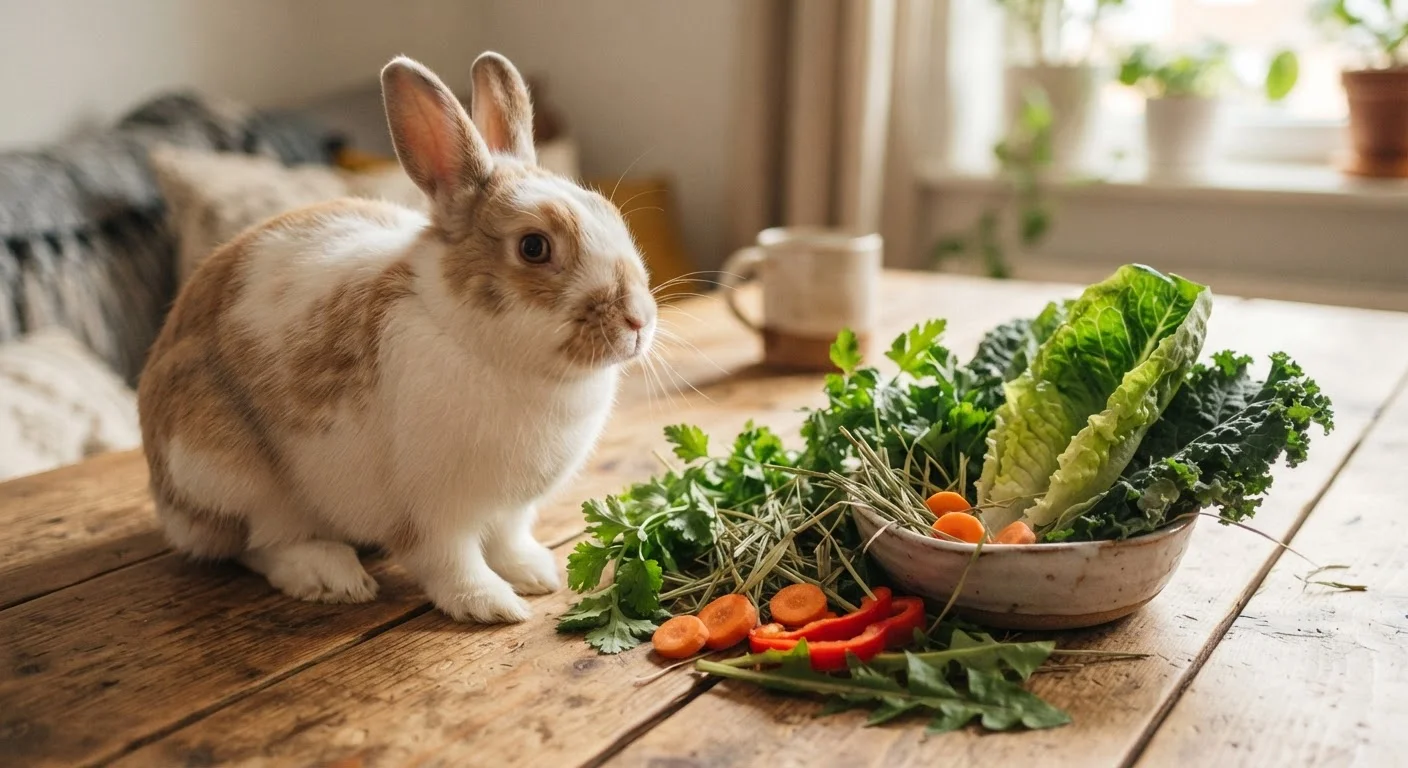
The core diet for rabbits across all life stages rests on three pillars: grass hay (the most important component), leafy greens, and limited pellets. What changes is the proportion and type of each, along with which supplemental foods are safe and appropriate. For a broader view of how nutritional needs evolve over a lifetime - even in humans - see how needs shift across life stages.
| Primary diet component (all ages) | Grass hay (timothy, orchard, or meadow) |
| Hay proportion of adult diet | 75-80% or more |
| Age to transition from alfalfa to grass hay | Around 6 months |
| Daily leafy greens (adult) | ~1 packed cup per 2 lbs body weight |
| Average rabbit lifespan (domestic) | 8-12 years |
| Senior threshold | 5+ years |
Feeding by Life Stage
Baby Rabbits (Birth to 8 Weeks)
Kits depend entirely on their mother's milk for the first three to four weeks. Attempting to supplement or wean earlier significantly increases mortality risk. From weeks four through eight, kits gradually begin nibbling on alfalfa hay and small amounts of alfalfa-based pellets alongside nursing. Do not introduce vegetables or fruits at this stage.
Juveniles (8 Weeks to 6 Months)
Once weaned, young rabbits benefit from unlimited alfalfa hay, which is higher in calcium and protein than grass hay - nutrients that support rapid bone and muscle development. Alfalfa-based pellets can be offered freely during this window. Introduce one new leafy green at a time and monitor stool for changes. Avoid fruit, starchy vegetables, and sugary treats entirely.
Young Adults (6 Months to 1 Year)
Around six months, the transition away from alfalfa begins. Switch gradually to grass hay - timothy, orchard grass, or meadow hay - which should make up at least 75-80% of the diet. Reduce pellets to roughly ¼ cup per 5 lbs of body weight daily. Expand the leafy green rotation to include romaine lettuce, cilantro, parsley, and bok choy. Avoid iceberg lettuce and spinach in large quantities.
Adults (1 to 5 Years)
The adult maintenance diet is straightforward: unlimited grass hay, a measured daily serving of mixed leafy greens (roughly 1 packed cup per 2 lbs body weight), and a controlled portion of quality grass-hay-based pellets. Treats - small pieces of fruit or carrot - should be genuinely occasional, not daily. Fresh, clean water must always be available. For a full overview of rabbit care beyond diet, see the full picture on caring for a pet rabbit.
Senior Rabbits (5+ Years)
Rabbits older than five may begin to lose body condition, experience dental changes, or develop chronic illness. Some seniors benefit from reintroducing small amounts of alfalfa hay to maintain healthy weight - but only under veterinary guidance, since excess calcium can be problematic in rabbits with kidney disease. Increase leafy green variety for nutrient density and monitor weight closely. Schedule veterinary checkups at least twice yearly. Just as aging cats have shifting nutritional needs, older rabbits deserve diet adjustments tailored to their individual health status.
Hindgut fermentation
The digestive process by which rabbits break down fibrous plant material in the cecum (a pouch between the small and large intestine). This fermentation produces cecotropes - nutrient-rich droppings that rabbits re-ingest directly from their hindquarters.
Cecotropes
Soft, nutrient-dense droppings produced in the cecum that rabbits eat directly, usually overnight. They are a normal and essential part of rabbit nutrition, providing B vitamins and protein.
Alfalfa hay
A legume-based hay that is higher in protein, calories, and calcium than grass hays. It is appropriate for young, growing, or underweight rabbits but should be phased out for healthy adults due to its rich nutrient profile.
Grass hay
Hays such as timothy, orchard grass, or meadow grass that form the dietary foundation for adult rabbits. High in digestible fiber, they support healthy gut motility and dental wear.
GI stasis
A dangerous condition in which a rabbit's gastrointestinal tract slows or stops moving. It can be triggered by a low-fiber diet, stress, or illness, and requires prompt veterinary attention.
Foods to Avoid at All Ages
Some foods are unsafe for rabbits regardless of age or life stage. Owners should keep the following off the menu entirely:
- Onions, garlic, and leeks - can suppress the immune system
- Avocado - toxic to rabbits
- Rhubarb - contains oxalic acid in harmful concentrations
- Chocolate and any caffeinated items - toxic
- Iceberg lettuce in large amounts - high water content and very low nutrition can cause loose stools
- Processed human foods, grains, and legumes - disrupt gut flora and fermentation
When to Call Your Vet About Diet
Any sudden change in appetite, a drop in droppings, or signs of weight loss warrants a veterinary call - not a diet change attempted at home. GI stasis in particular can escalate quickly. A rabbit-savvy veterinarian can help you fine-tune feeding plans based on your individual rabbit's weight, health history, and age.
If you are bringing a rabbit home for the first time, reviewing a small pet preparation checklist can help ensure your supplies and routine are ready from day one. Proper housing also plays a direct role in digestive health - see what a rabbit enclosure actually needs for guidance on environment setup.
This article is for general informational purposes only and is not veterinary advice. Always consult a licensed veterinarian for guidance specific to your rabbit's health, weight, and medical history.