

Key Takeaways
Understanding Rabbit Biology and Behavior
Rabbits are prey animals with a finely tuned instinct to conceal weakness, which means illness can go undetected until it becomes serious. Understanding this baseline helps owners read their rabbit's subtle cues more accurately than they might with a dog or cat. See our comprehensive cat ownership guide for a useful contrast in how different companion species communicate distress.
Rabbits are crepuscular - most active at dawn and dusk - which means they are not naturally well-suited to a daytime-only interaction schedule. They are also highly intelligent, form genuine social bonds, and can live 8-12 years with proper care, making them a long-term commitment comparable to many dog breeds.
Train yourself to count your rabbit's cecotropes. A healthy rabbit consumes these soft, nutrient-dense droppings directly from their hindquarters each morning - if you are consistently finding them uneaten in the litter box, it is often a sign of obesity, pain, or dental problems limiting the rabbit's flexibility.
Cecotrope consumption is a critical part of a rabbit's nutrition cycle, and failure to consume them is an underappreciated but reliable early indicator of health issues.
When introducing a rabbit to a new space, place a worn item of your clothing near their enclosure for the first few days. This allows them to acclimate to your scent passively before direct handling, which reduces stress-related defensive biting significantly.
Rabbits are scent-oriented animals and low-stress introductions reduce the likelihood of fear-based aggression that can otherwise set a negative tone for the human-animal bond.
Housing: Space, Safety, and Setup
The single most common mistake new rabbit owners make is underestimating space requirements. A rabbit's enclosure should allow the animal to take at least three to four full hops in any direction, stand fully upright on hind legs, and stretch out completely. For most medium breeds, that translates to an absolute minimum of 12 square feet of living space - and ideally much more.
Solid-bottomed flooring is essential. Wire-floor cages cause pododermatitis (sore hocks), a painful and recurring foot condition. Safe bedding options include paper-based or hay-based substrates. A separate litter box - rabbits are naturally inclined to eliminate in a consistent spot - makes cleanup manageable and reinforces good habits.
Rabbit-Proofing Is Non-Negotiable
Rabbits chew continuously - it is a biological drive, not a behavioral problem. Electrical cords, baseboards, and toxic houseplants such as lilies, philodendron, and foxglove must be physically inaccessible before any free-roam time begins. A single chewed cord can cause electrocution; a mouthful of certain plants can cause fatal toxicity within hours.
Before bringing a rabbit home, use our small pet preparation checklist to confirm your space and supplies are ready. Also note: rabbits and guinea pigs should never share a cage - the reasons are both medical and behavioral.
Diet and Nutrition
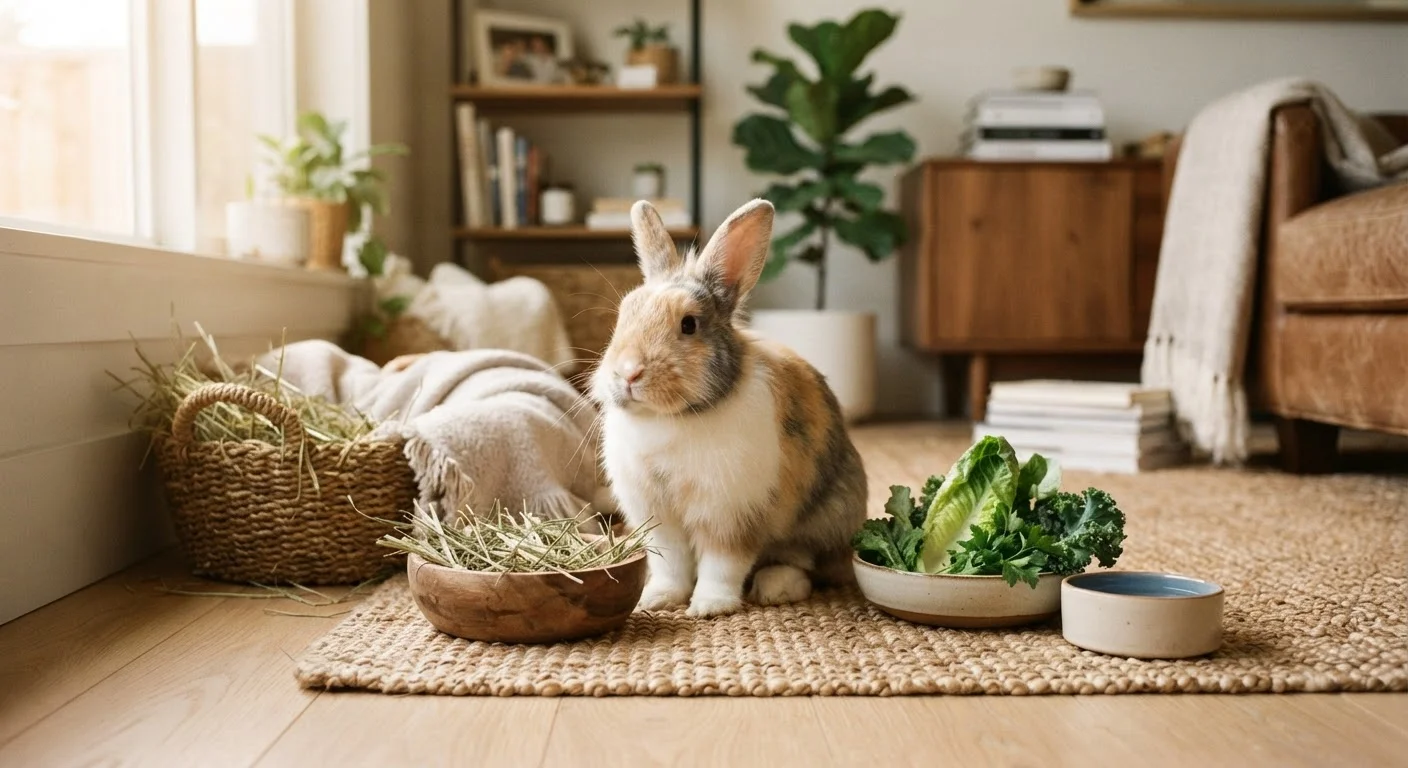
A rabbit's digestive system depends on continuous movement - fiber from unlimited grass hay (timothy, orchard, or meadow hay) keeps the gut motile and teeth worn appropriately. Hay should constitute roughly 80% of daily intake. Fresh leafy greens - such as romaine lettuce, cilantro, and arugula - provide hydration and variety. Pellets, if offered, should be plain, timothy-based, and limited to about one-quarter cup per five pounds of body weight daily.
Foods to avoid include iceberg lettuce, starchy vegetables, fruit in large quantities, seeds, nuts, and any commercial treat marketed as a colorful yogurt drop or seed mix. These can destabilize gut flora and trigger dangerous GI disruption.
80%
Proportion of diet that should be hay
Veterinary rabbit care guidelines consistently identify grass hay as the foundation of a healthy rabbit diet, supporting both dental wear and gut motility.
8-12 years
Typical lifespan of a well-cared-for rabbit
With appropriate nutrition, housing, veterinary care, and enrichment, domestic rabbits commonly live into their second decade.
>50%
Lifetime uterine cancer risk in unspayed females
Multiple veterinary sources cite uterine adenocarcinoma as one of the most common cancers in intact female rabbits, underscoring the importance of early spaying.
Fresh water must be available at all times, either in a heavy ceramic bowl or a sipper bottle - though bowls are generally considered easier for rabbits to drink from naturally.
Grooming and Hygiene
Grooming needs vary by coat type. Short-haired breeds such as Rex rabbits need brushing once or twice weekly, while long-haired breeds like Angoras require daily combing to prevent painful mats. During seasonal molts - which can be dramatic - daily brushing for any breed helps reduce the risk of the rabbit ingesting loose fur and developing wool block, a form of GI obstruction.
Rabbits are fastidious self-groomers and should never be bathed unless directed by a veterinarian. Bathing causes severe stress and can lead to shock or hypothermia. Instead, use a dry or damp cloth to spot-clean soiled areas if needed.
Nails should be trimmed every six to eight weeks. Overgrown nails snag on bedding and can cause skeletal deformities over time. If you are uncomfortable trimming at home, a rabbit-savvy veterinarian or groomer can demonstrate technique safely.
Veterinary Care and Common Health Concerns
Rabbits should be seen by a rabbit-experienced exotic veterinarian - not all small animal practices have deep rabbit expertise. An annual wellness exam is a reasonable baseline for healthy adults, with increased frequency for seniors (generally rabbits over five years old).
GI Stasis Is a Veterinary Emergency
If your rabbit has not eaten, has not produced droppings, or appears lethargic and hunched for more than a few hours, contact a rabbit-experienced veterinarian immediately. GI stasis can become fatal within 24-48 hours without treatment. Do not wait to see if the rabbit 'bounces back' on its own.
Spaying females is especially critical: unspayed female rabbits have a lifetime uterine cancer risk estimated at over 50% by some veterinary sources. Neutering males reduces territorial aggression and eliminates testicular cancer risk. Both procedures also make litter training easier and reduce hormonally driven destructive behaviors.
Common conditions to monitor include dental disease (rabbit teeth grow continuously and can misalign), GI stasis (a life-threatening digestive slowdown), ear mites, and upper respiratory infections. Any rabbit that stops eating, stops producing droppings, or sits hunched and immobile should be treated as a medical emergency.
Enrichment and Social Needs
Rabbits kept in bare enclosures with no interaction or stimulation frequently develop repetitive behaviors, aggression, or depression-like states. Daily free-roam time in a rabbit-proofed area - with electrical cords, toxic houseplants, and small gaps behind furniture addressed - supports physical health and mental wellbeing.
Enrichment can include tunnels, cardboard boxes to chew and rearrange, willow balls, paper bags stuffed with hay, and foraging mats. Rotating items keeps novelty high without significant cost.
Many rabbits benefit from a bonded companion of their own species. Two spayed or neutered rabbits, properly introduced using a gradual neutral-territory process, typically form close bonds. Compare this social dynamic with the needs of other small pets: guinea pigs and exotic species like chinchillas and ferrets each have distinct socialization requirements worth understanding before mixing species or households.
“Rabbits are not low-maintenance pets. They are small animals with complex needs - social, dietary, and environmental - that require as much thoughtful attention as a dog or cat.”
— Dana Krempels, Senior Lecturer in Biology, University of Miami, and rabbit behavior researcher
This article is for general informational purposes only and is not a substitute for advice from a qualified veterinarian familiar with your rabbit's individual health needs.