

Key Takeaways
Start here
Why Intersections Demand Your Full Attention
Next
Reading Traffic Signals Correctly
Then
Right-of-Way: Who Goes First
Apply it
Common Intersection Mistakes and How to Avoid Them
Why Intersections Demand Your Full Attention
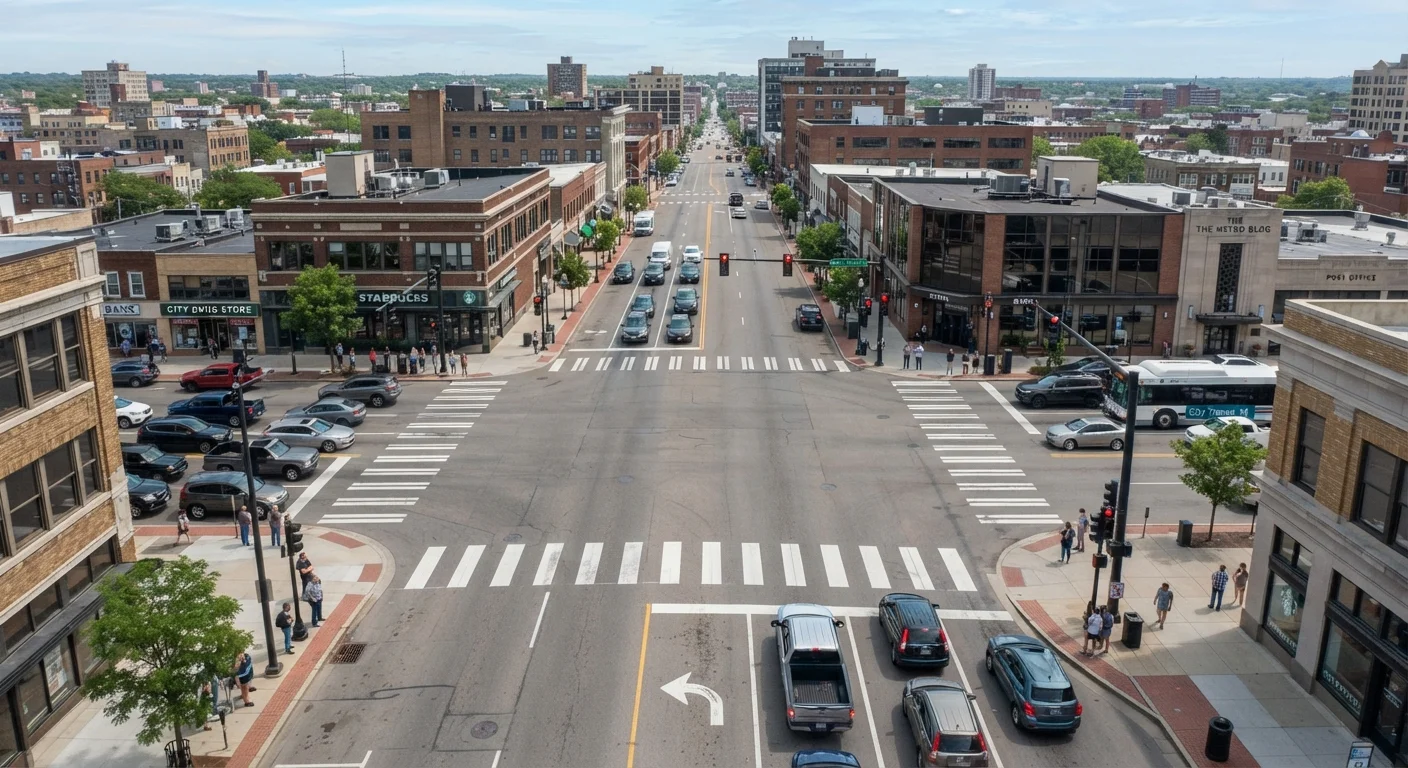
Intersections - where two or more roads cross - concentrate more potential conflict points than any other place on a typical drive. According to the Federal Highway Administration, roughly half of all traffic crashes, and a significant share of fatalities, occur at or near intersections. Multiple streams of vehicles, cyclists, and pedestrians converge from different directions, often under time pressure, with overlapping expectations about who moves next.
Understanding intersection rules is not just a matter of passing a driving test. It is foundational to every trip you take. See how these risks compare across different driving environments in our piece on highway versus city driving hazards.
Right-of-way
The legal right to proceed before another driver, cyclist, or pedestrian in a given situation. It is assigned by law, not negotiated on the spot.
Controlled intersection
An intersection managed by a traffic signal or stop/yield signs that dictate who must stop or yield.
Uncontrolled intersection
An intersection with no traffic signal or regulatory signs. Drivers rely on yielding conventions - typically yield to the right - to determine order.
Protected turn
A turn made on a dedicated green arrow signal, during which oncoming traffic is stopped. The turning driver does not need to yield to opposing vehicles.
Permissive turn
A turn made on a solid green light (not an arrow). The turning driver must yield to oncoming traffic and pedestrians before completing the maneuver.
Stop line
A white line painted across the road before an intersection. Vehicles must stop with their front bumpers behind this line when required to stop.
Reading Traffic Signals Correctly
Traffic signals communicate precise legal instructions - not suggestions. Here is what each phase actually means under U.S. traffic law:
- Solid red: Stop before the stop line or crosswalk and remain stopped until the signal changes. A right turn on red is permitted in most states after a full stop, unless a sign prohibits it.
- Solid yellow: Prepare to stop. Yellow does not mean accelerate to clear the intersection - it signals that red is imminent. Entering on yellow is generally permissible only if stopping safely is not possible.
- Solid green: Proceed if the intersection is clear. Green grants permission to move, not an absolute guarantee the path is safe. Always scan before entering.
- Flashing red: Treat as a stop sign - come to a full stop, yield, then proceed when clear.
- Flashing yellow: Slow down and proceed with caution. No stop is required, but full attention is.
- Green arrow: Protected movement - oncoming traffic is held. You may proceed in the arrow's direction without yielding to opposing vehicles.
Use Signal Timing as a Planning Tool
As you approach an intersection, note how long the signal has been green. A light that has been green for a while is more likely to turn yellow soon - start easing off the accelerator early. This habit reduces the temptation to run yellows and gives you more reaction time if the car ahead stops suddenly.
Dedicated pedestrian signals (the walking figure and countdown timer) govern foot traffic but also provide useful cues to drivers: a countdown nearing zero often precedes a signal change, giving you time to prepare.
Pair your signal knowledge with a strong foundation in U.S. road signs - many intersections combine signal control with regulatory signage.
Right-of-Way: Who Goes First
Right-of-way is the legal entitlement to proceed first in a given traffic situation. It is not something you take - it is something that is legally assigned, and other road users are expected to yield it to you. Critically, having the right-of-way never excuses failing to avoid a collision when you reasonably could have.
The Right-of-Way Hierarchy
- Traffic control signals override everything else. If a signal says go, you have priority - but still scan for red-light runners.
- Traffic signs (stop, yield) govern uncontrolled intersections. A driver facing a stop sign yields to all traffic on the through road.
- Yielding conventions apply where no signal or sign is present. At an uncontrolled intersection, yield to any vehicle already in the intersection, then yield to the vehicle on your right if you arrive simultaneously.
Left Turns
A left turn across oncoming traffic is the most demanding right-of-way scenario most drivers encounter routinely. The turning driver must yield to all oncoming traffic and to pedestrians crossing the destination road, regardless of who arrived first. Do not begin the turn based on an oncoming driver's gesture - they cannot speak for vehicles behind them.
Pedestrians and Cyclists
In most U.S. states, drivers must yield to pedestrians in any marked crosswalk and in many unmarked crosswalks at intersections. Cyclists riding in a bike lane generally have the same right-of-way as a vehicle in that lane. For a deeper look at sharing space with vulnerable road users, see our guide on driving safely around trucks, motorcycles, and cyclists.
Right-of-Way Does Not Prevent Liability
Having the legal right-of-way does not automatically shield you from liability if a collision occurs. Courts and insurers examine whether a driver took reasonable steps to avoid a crash - even one the other party caused. Always verify it is actually safe to proceed, regardless of who has priority.
Common Intersection Mistakes and How to Avoid Them
Even experienced drivers develop habits that increase intersection risk. These are the patterns most likely to cause conflict:
- Rolling stops: A slow roll is not a legal stop. Come to a full stop - wheels motionless - before the stop line. Courts and insurers treat rolling stops as stop-sign violations.
- Misjudging yellow lights: Accelerating on yellow to avoid stopping is a leading cause of right-angle (T-bone) crashes. When in doubt, stop.
- Creeping into the intersection while waiting to turn left: Positioning your vehicle partly into the intersection while waiting for a gap is accepted practice in many states, but only if you intend to complete the turn before the signal changes - and only if local law permits it. Do not get caught blocking the intersection when the light turns red.
- Ignoring blind approach angles: Buildings, parked vehicles, or landscaping can hide pedestrians and cyclists until they are directly in your path. Reduce speed and extend your scan before entering.
- Assuming the other driver will yield: Never proceed solely because you have the right-of-way. Confirm the other driver is actually stopping before you commit to the intersection.
Sharpening these habits connects directly to the broader discipline of defensive driving - anticipating hazards rather than simply reacting to them. Developing your situational awareness while scanning and spacing will make every intersection feel more manageable.
State Laws Vary on Intersection Rules
While the rules described here reflect widely adopted U.S. standards, specific details - such as right-turn-on-red restrictions, crosswalk definitions, and left-turn positioning rules - can differ by state or municipality. Consult your state's official driver's manual or vehicle code for the rules that apply where you drive.